What is Birdie?
Birdie is the leading homecare technology platform designed to simplify and modernise care operations. Birdie provides care providers with an all-in-one solution for care management, scheduling, auditing, workforce management, and finance management, equipping care providers with the tools they need to deliver better quality care and improve efficiency across day-to-day operations.
Key challenges
Rostering was our largest driver of customer churn.
Birdie’s growth was continually held back by churn linked to our rostering product. Customers frequently cited missing functionality and inefficiency in the rostering product as reasons for leaving, resulting in significant lost revenue.
Rostering frequently led to lost deals with large customers.
While our original rostering solution was successful in the SME market, it struggled to convert up-market MME leads into sales. Roughly two-thirds of MME prospects cited concerns around unmet requirements or the system’s ability to scale with their care volumes.
Research & Co-development
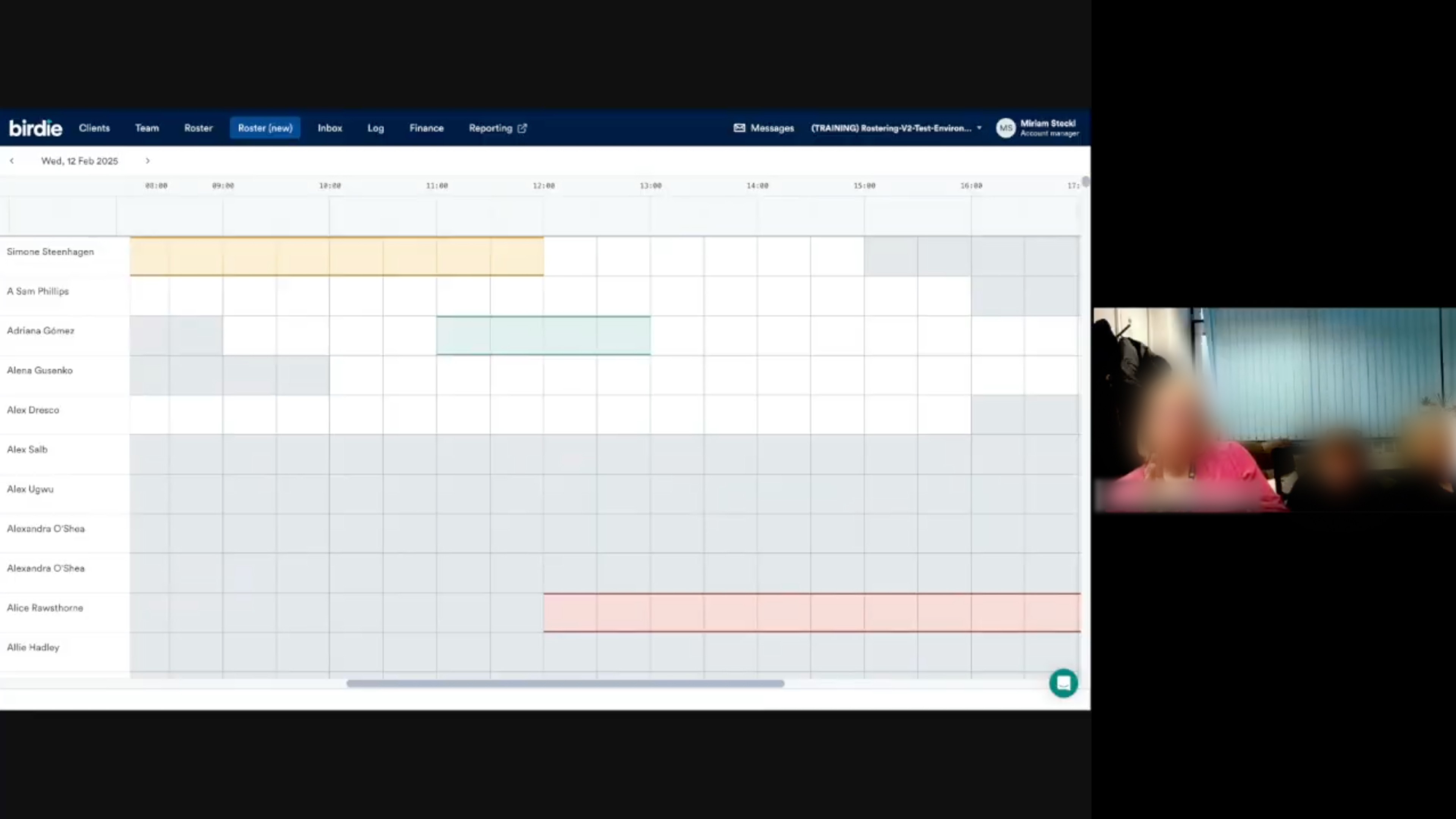
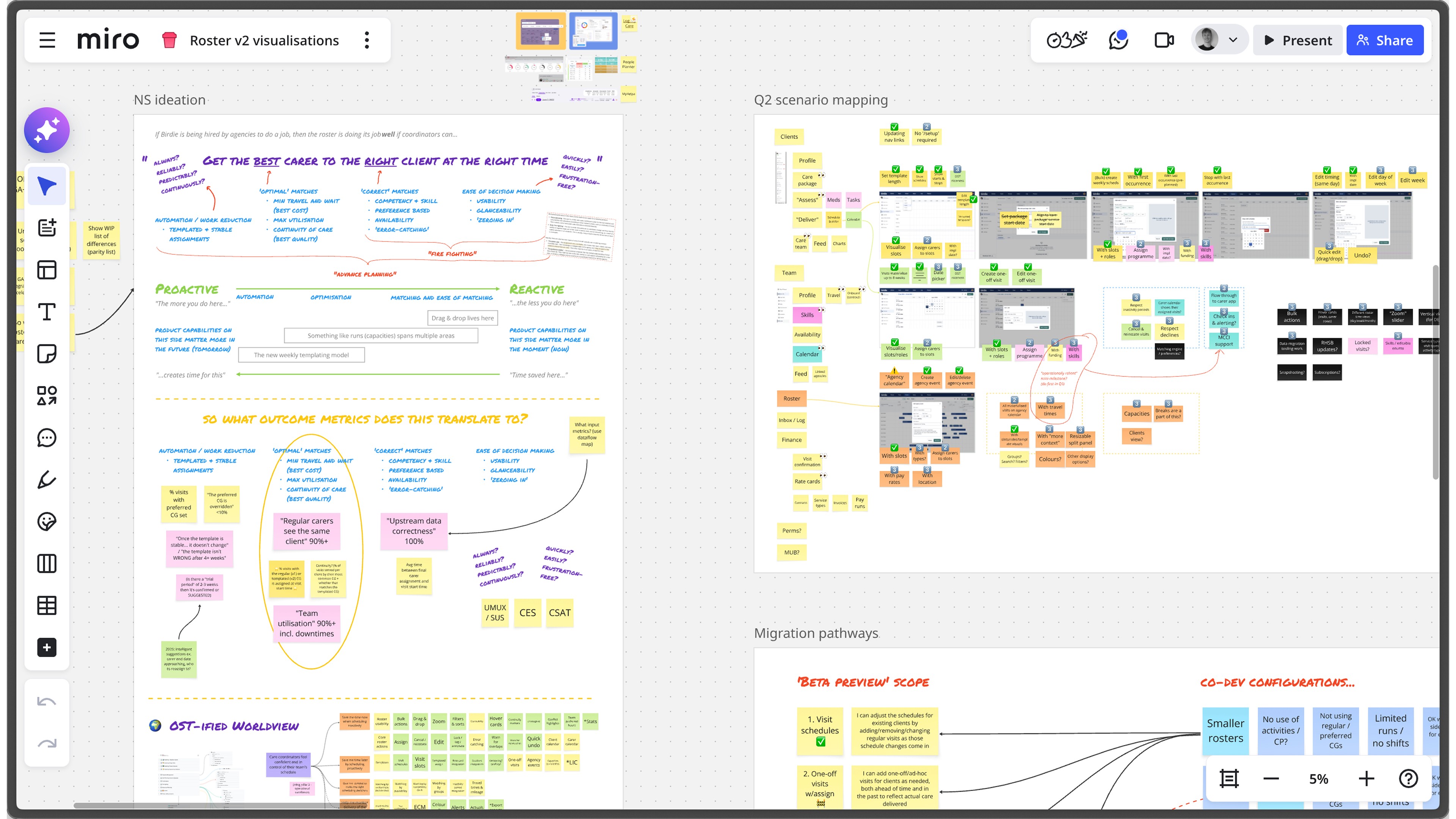
To understand where the old rostering system was failing, we launched the co-development programme: a continuous feedback loop spanning discovery, ideation, and validation. We partnered with over 25 care agencies that were hand-picked to represent the diversity of care models (domiciliary care, live-in care, supported living) and business sizes found in the care sector. Across the entire project, we held over 325 hours of moderated research calls with our partners, helping us design, build and test more than 40 features.
Unpacking the problem
Poor adoption of templating
Our original templating system was opaque and often unpredictable. Instead of having exact control over which carer was assigned to a visit, it used a background algorithm to pick the best match from a handful of preferred carers. However, this algorithm often returned unwanted results, leading to users losing trust in the feature. Many chose to stop using the templating feature entirely, instead opting to assign visits manually, which was more time-consuming and less efficient, especially for larger branches. Users needed a templating system that was more observable, predictable and directly controllable.
No support for alternating rotating rotas
Care coordinators commonly plan care visits using alternating rotas that switch between carers over time. This is crucial to ensure rotas have full coverage as coordinators cannot guarantee that carer availability will remain the same each week, and it helps distribute less desirable shifts more fairly. Our previous rostering product simply didn’t support this. As a result, coordinators were often forced to manually reassign visits to meet carer preferences and cover for changing carer availability. This not only increased the administrative burden, distracting coordinators from more valuable work.
Dummy patients
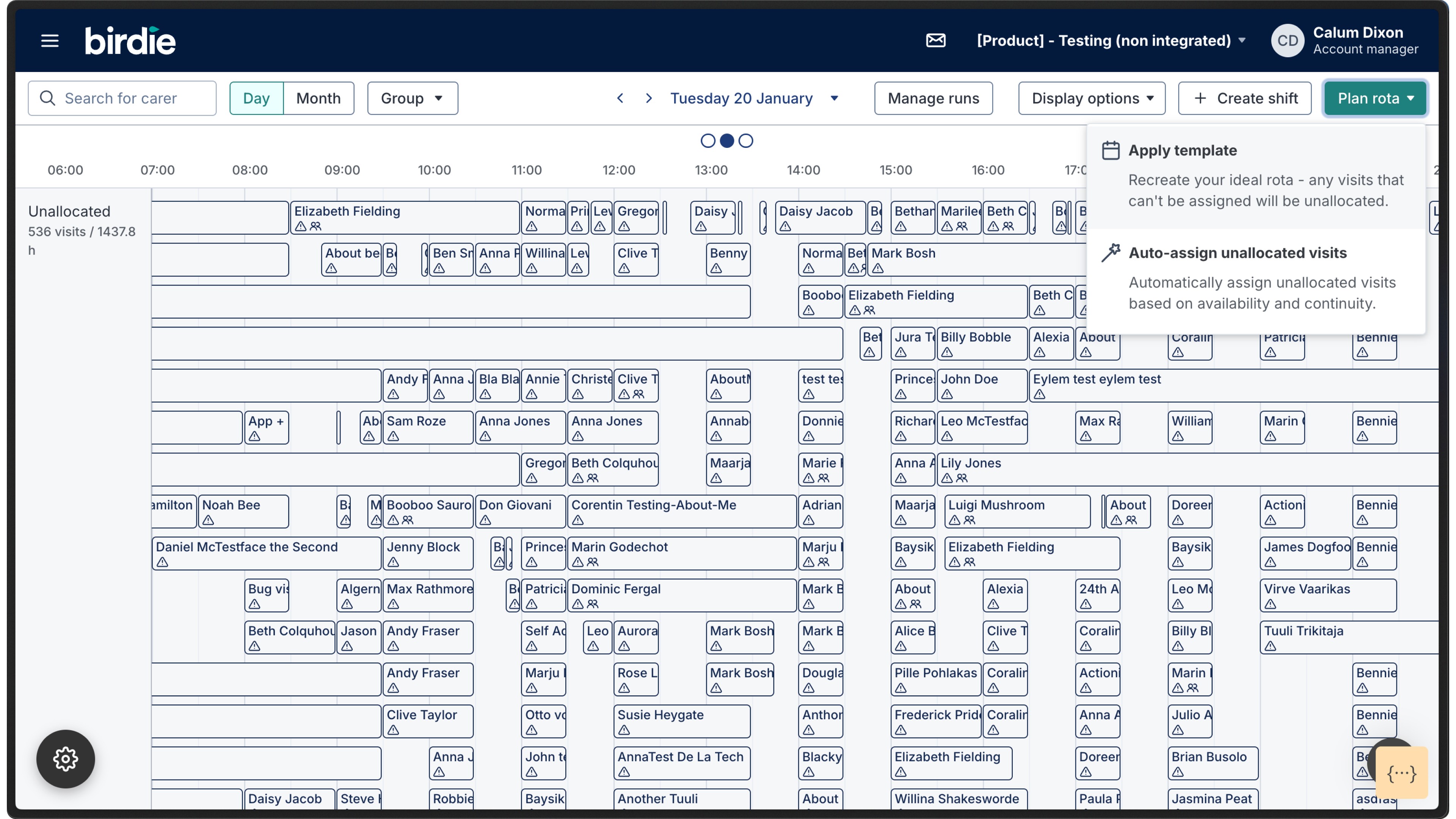
Care coordinators manage far more than care visits. However, Birdie only supported scheduling for patient care, and nothing else. To compensate, coordinators invented fake patients with names such as “Training days” and “Company Meetings” to handle other non-care events.
Difficulty seeing the bigger picture
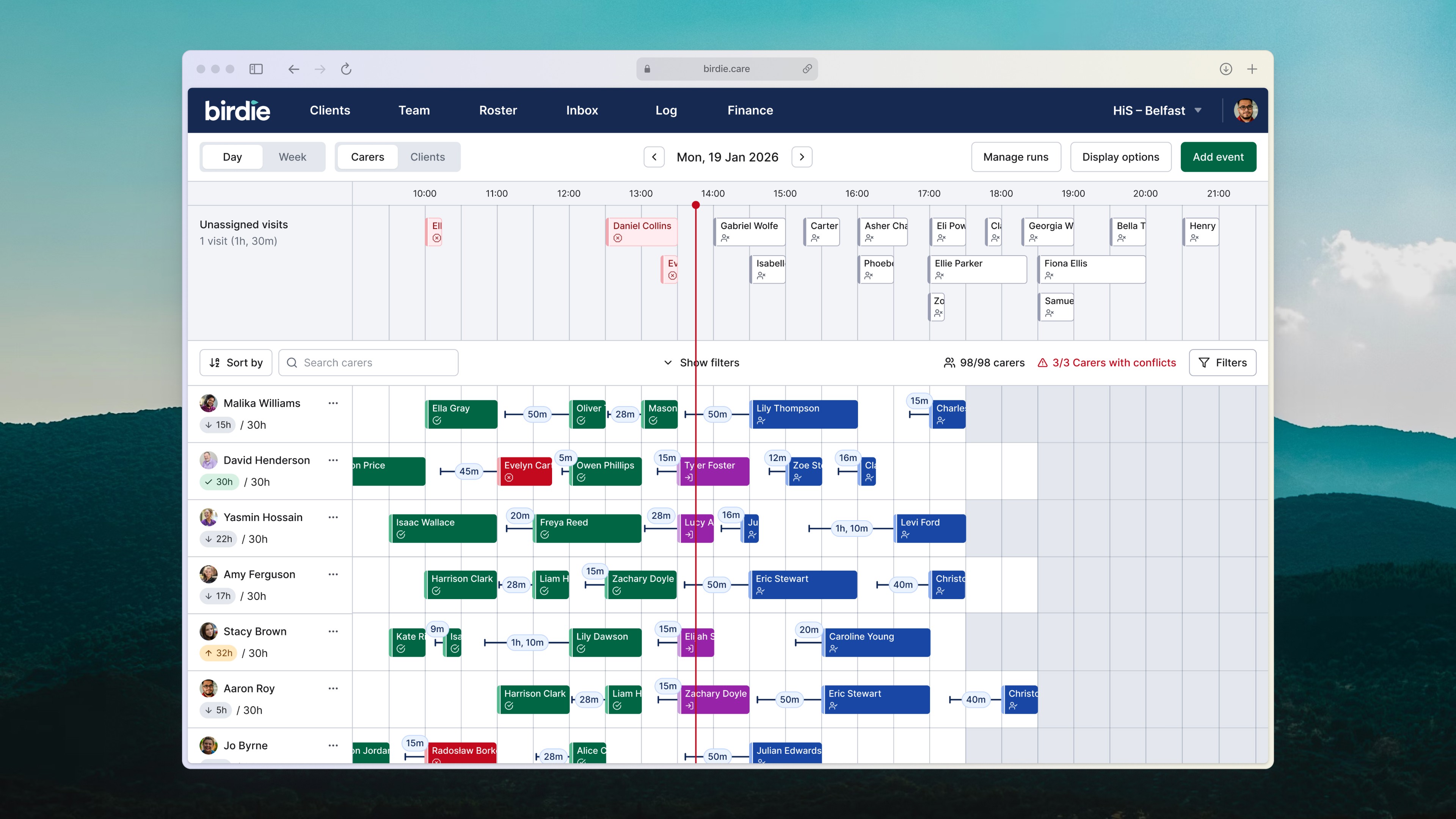
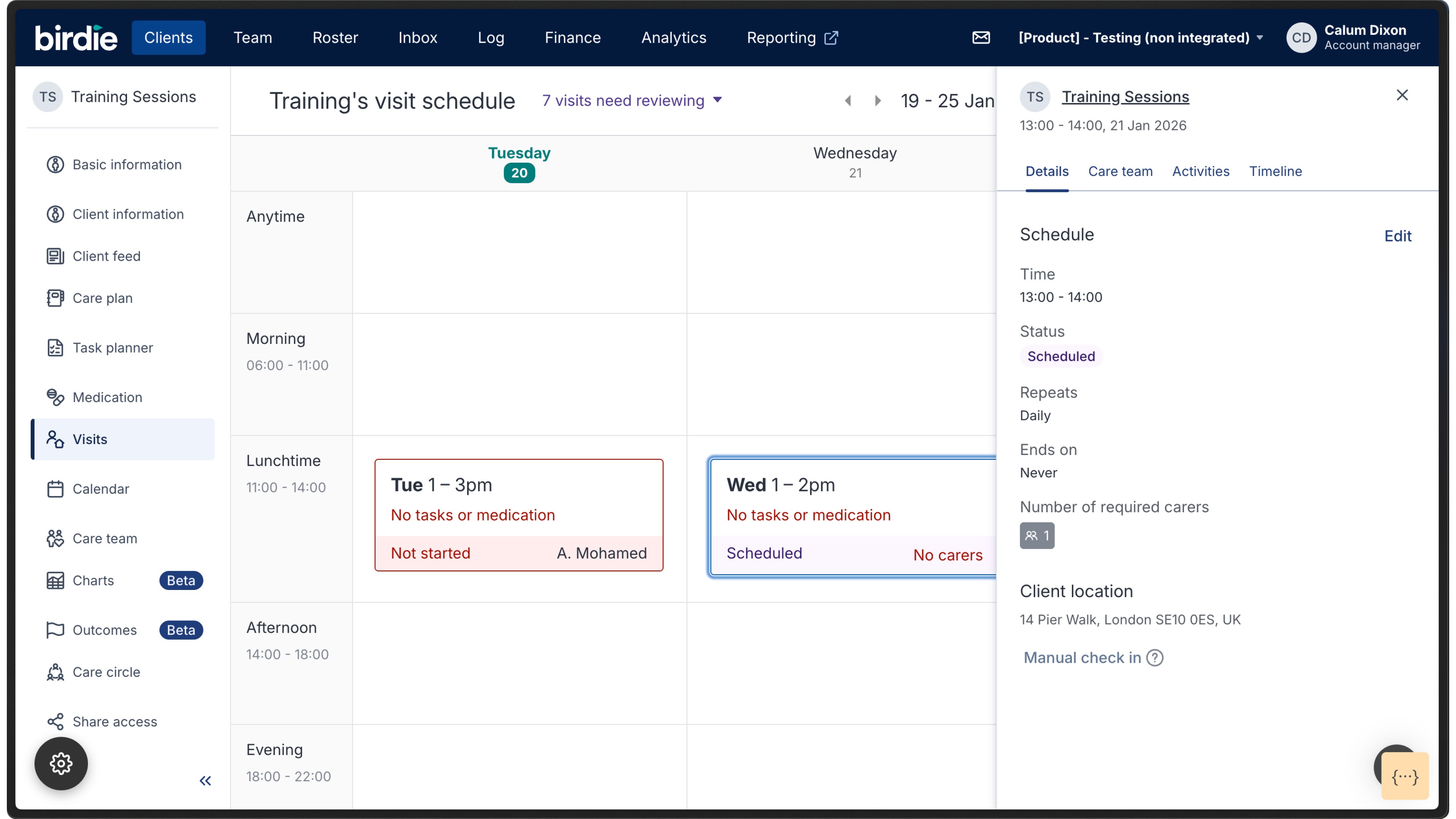
Coordinators lacked a complete view of the week. Birdie’s roster page only displayed one day at a time, and whilst patient and carer profiles offered separate weekly views, the scope of information was limited to that of the patient or carer. Users were forced to jump between profiles or days on the roster to piece together the bigger picture. This fragmented approach made it difficult to plan care efficiently or spot scheduling gaps at a glance.
Task management
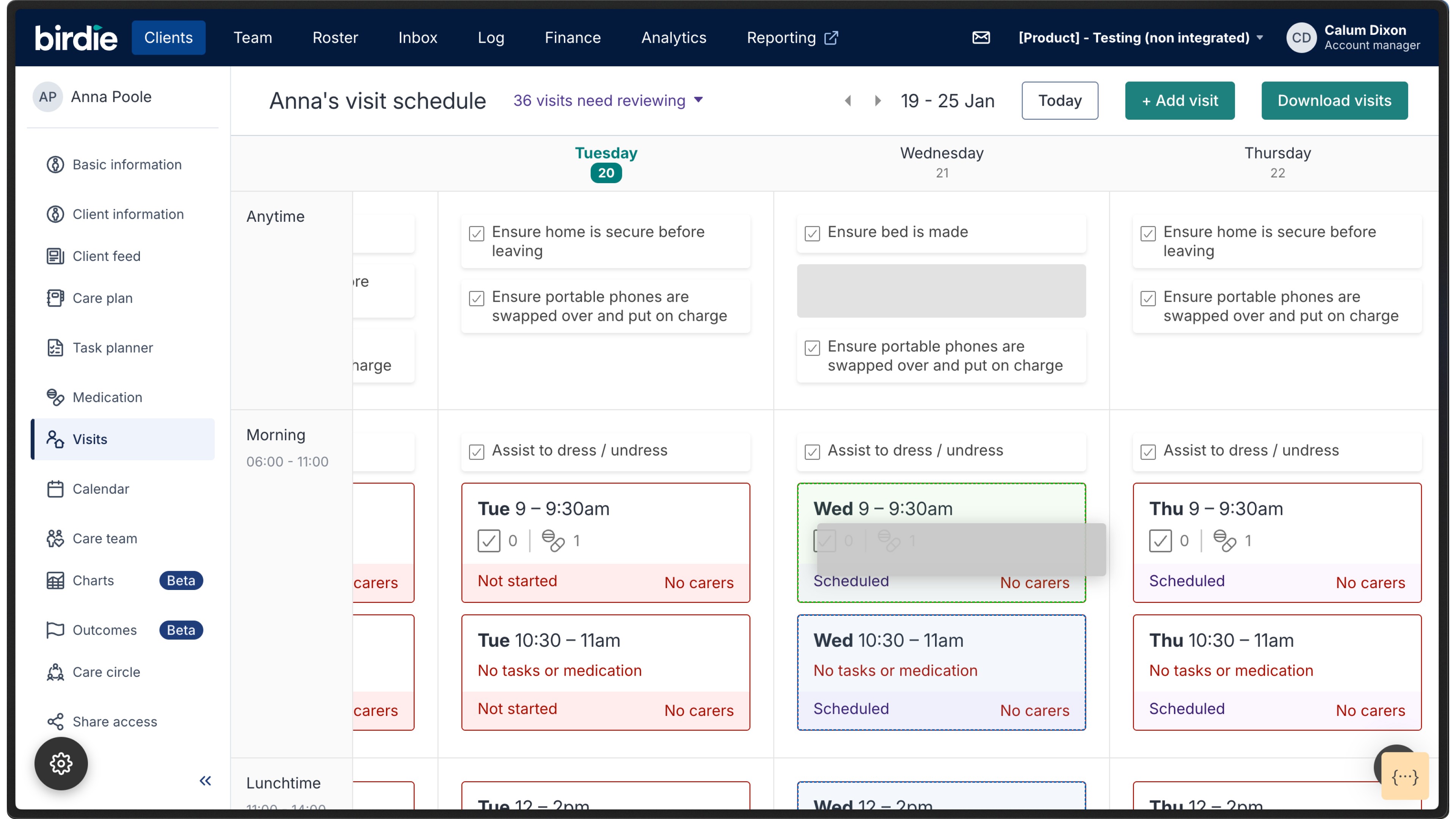
Assigning tasks and medication to visits was a slow, repetitive and occasionally error-prone workflow. In the previous roster product, care managers had to manually drag and drop each task and medication onto a templated visit. For long visits such as live-in care, this could involve dragging and dropping upwards of 50 items, creating a long and highly repetitive process. The manual nature of this workflow also introduced risk, as tasks or medications could be dragged onto the wrong visit by mistake, leading to missed medication doses.
The solution
Multi-week templates
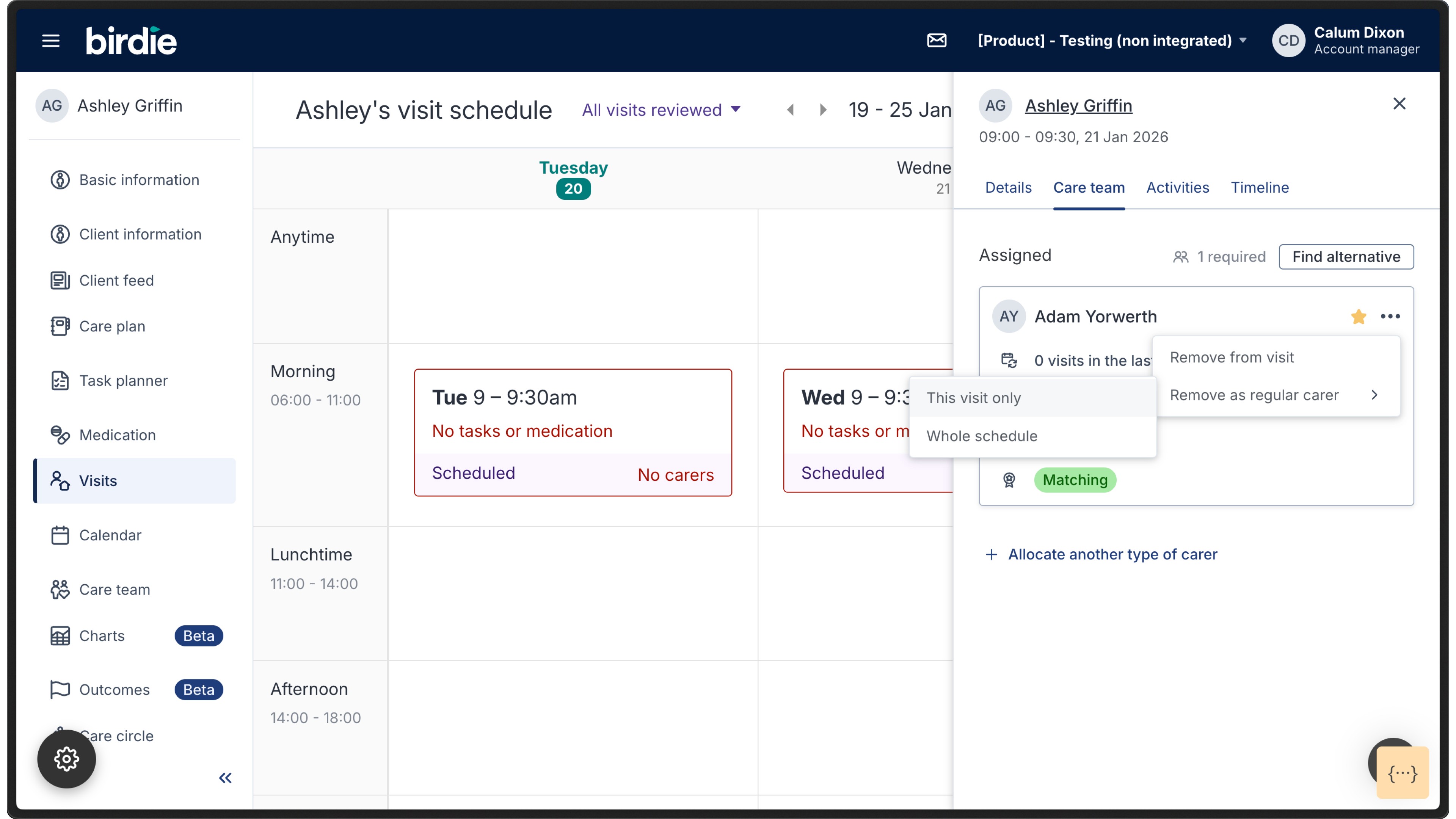
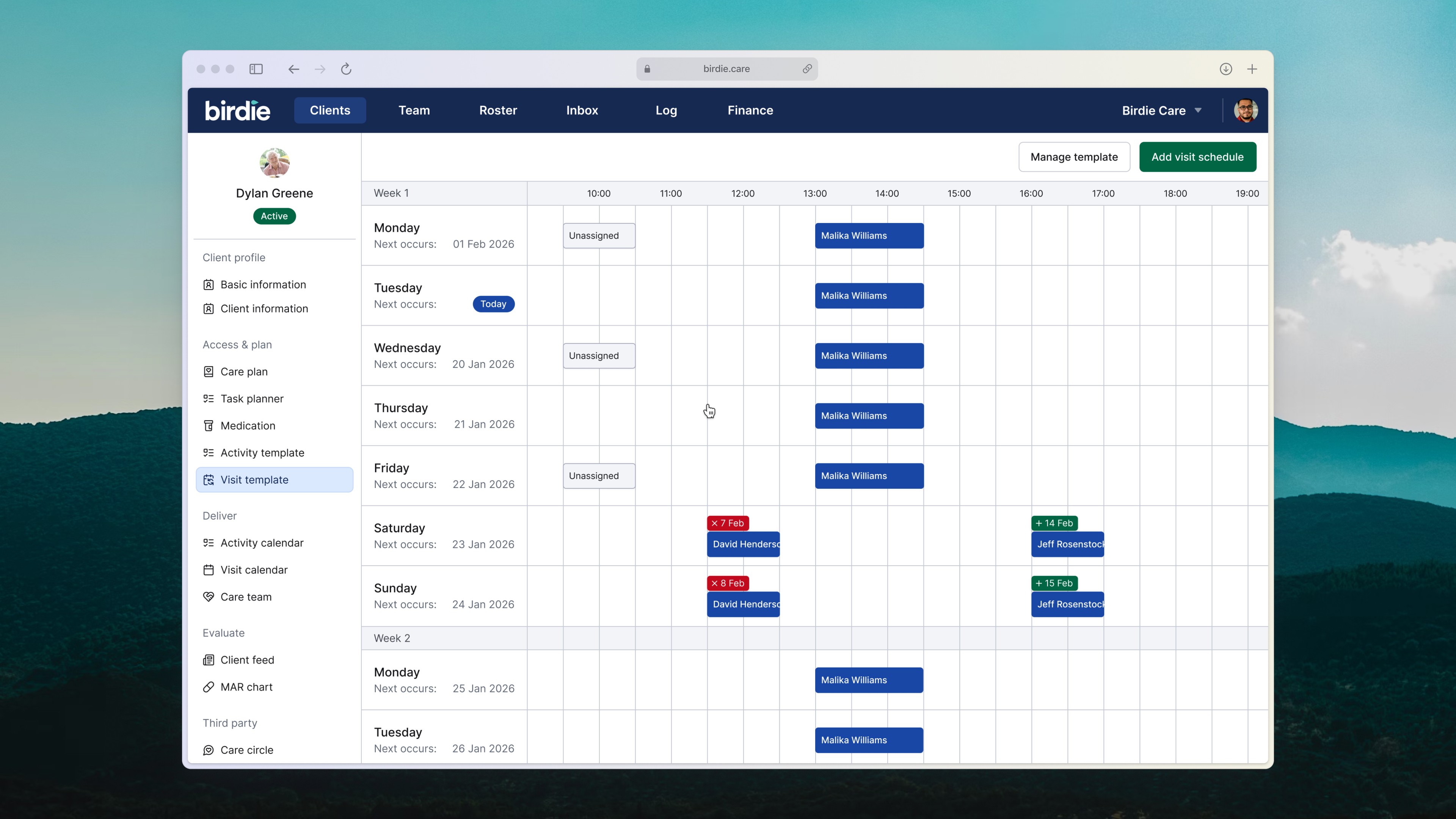
We’ve replaced our old matching algorithm with a powerful new Visit Template page. Templates enable care coordinators to build predictable and fully visible visit plans, which are automatically applied to the roster on a rolling basis. Coordinators can now make changes to their visit plans and instantly see their updates reflected on the roster, eliminating guesswork and restoring trust in Birdie’s templating system.
Visit templates can span multiple weeks, visit assignees, and details can differ week-to-week. Enabling care coordinators to build complex plans that work around carer preferences and availability, eliminating the need for manually adjusting visits on a recurring basis due to the lack of alternating rotas. Instead of focusing on adjusting visits to match our ideal plan, our ideal plan is already applied; now we can focus on responding to the day-to-day challenges of care coordination, such as covering sick leave.
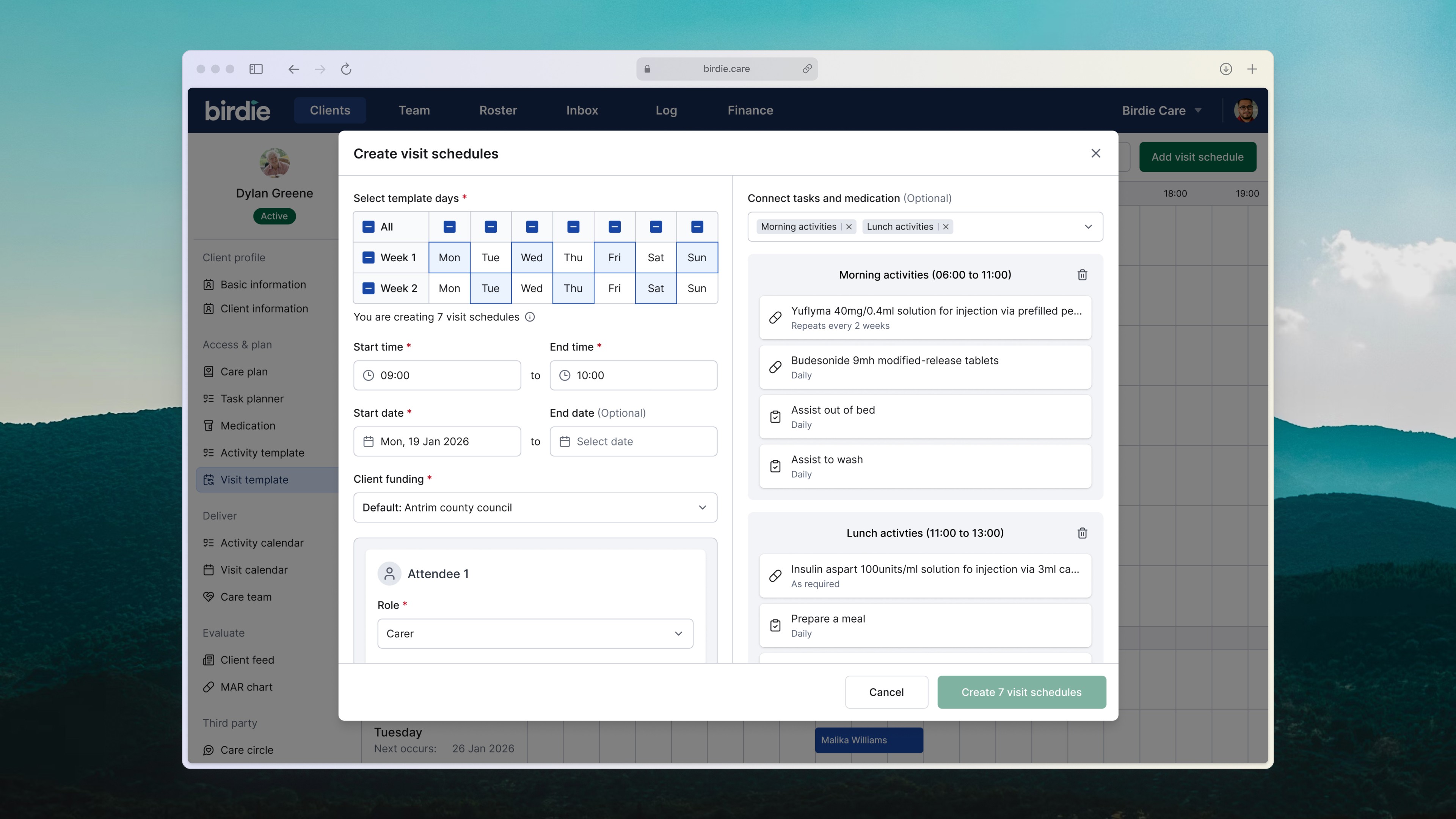
Linking tasks and medications in one click
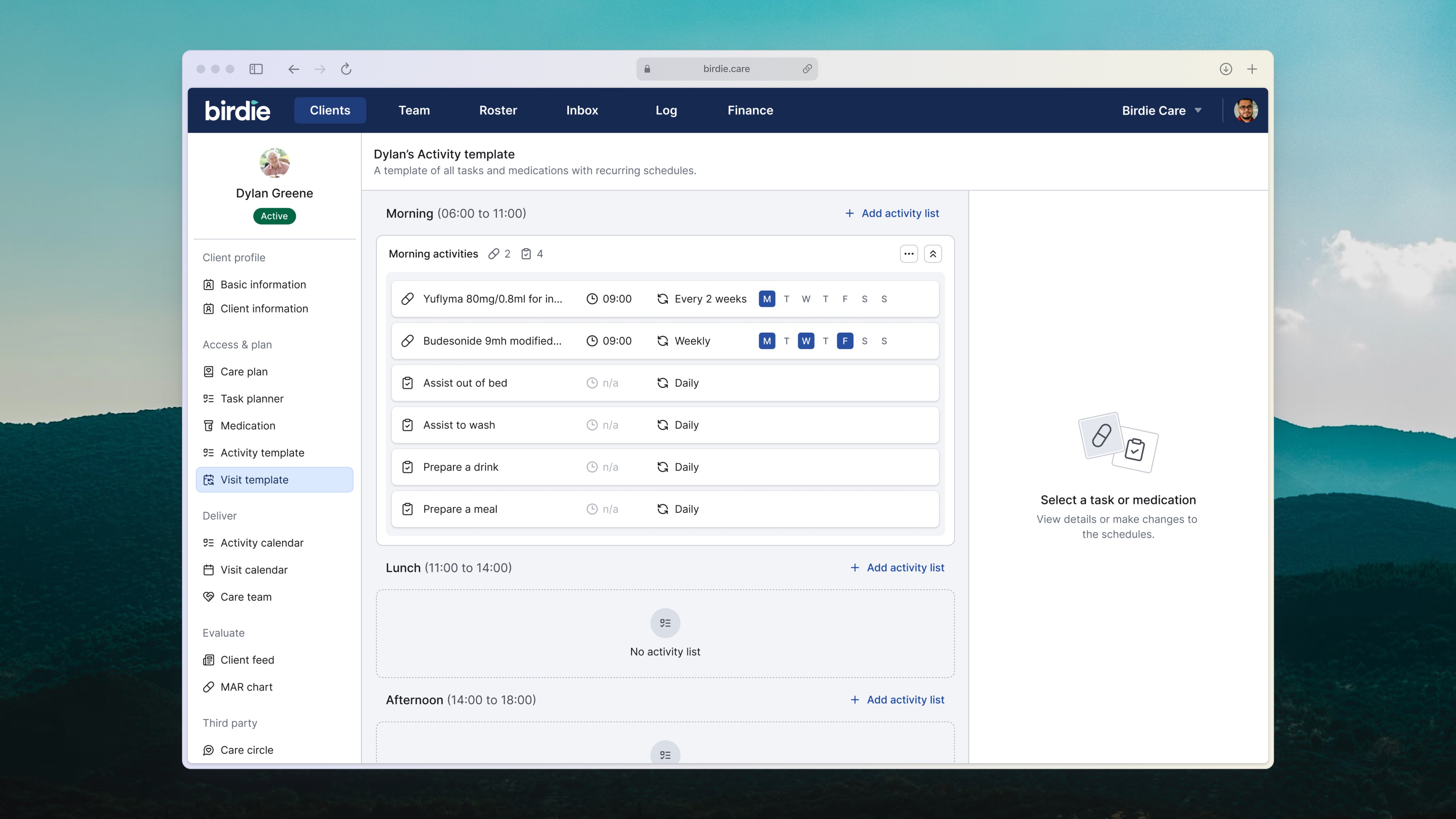
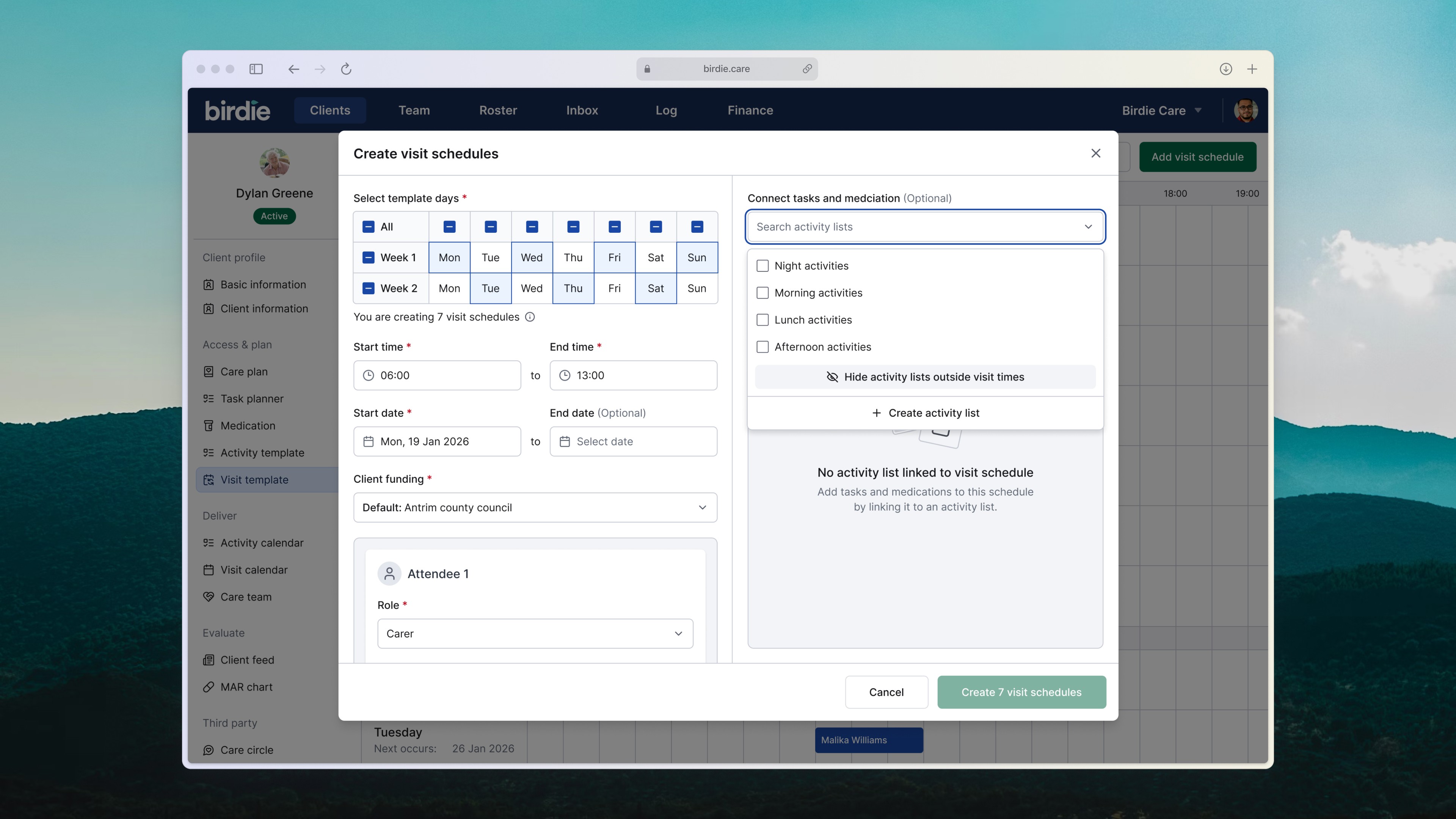
We’ve streamlined the process of linking tasks and medications to visits by automatically grouping them into lists based on the time they occur. These task lists can be quickly and easily linked to visits in our template or calendar via a dropdown menu. What once required dozens of repetitive actions is now a single click, dramatically reducing setup time and minimising the risk of errors.
Adding a weekly view to the roster
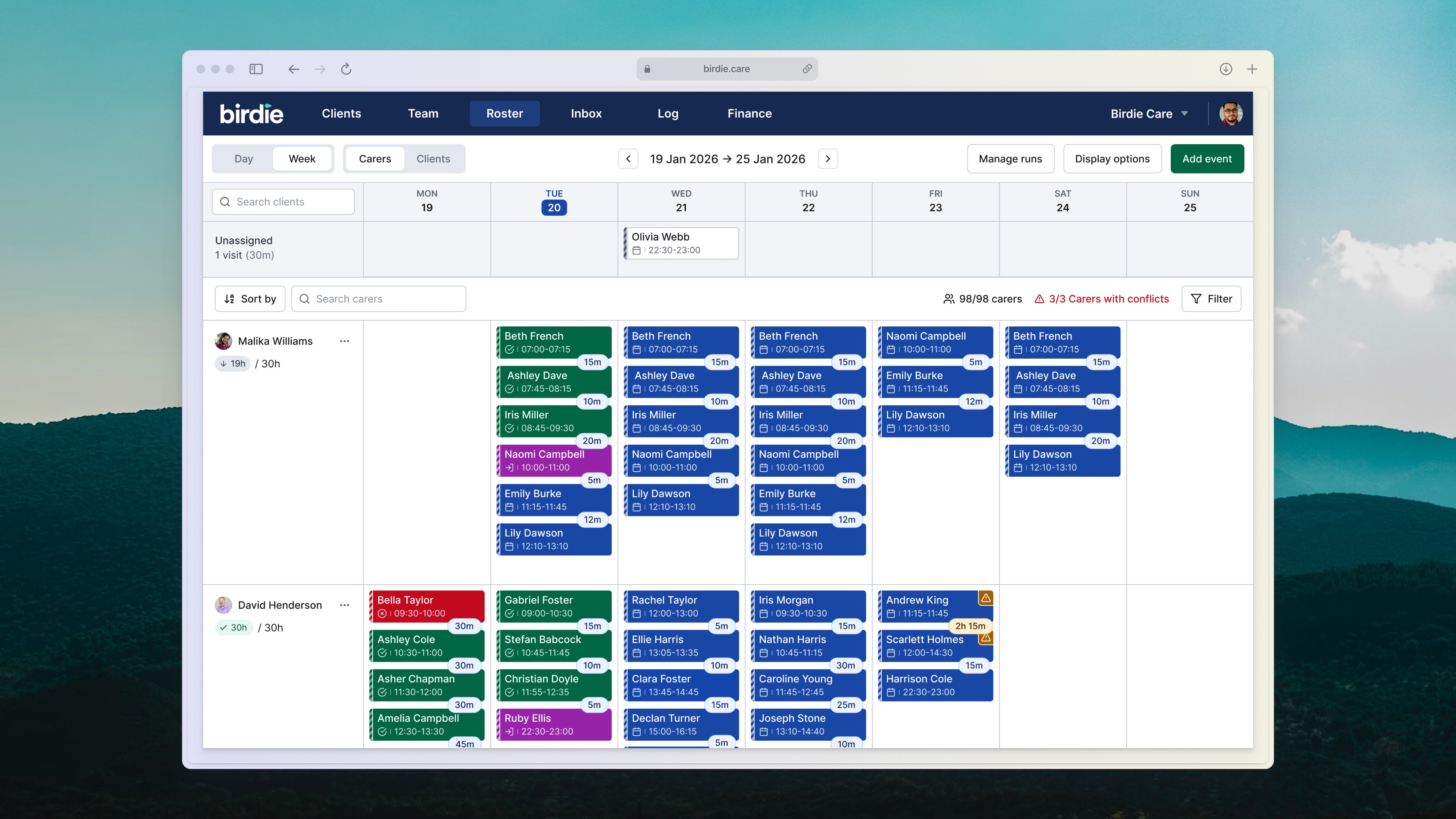
We’ve streamlined the roster page experience by launching a weekly view to complement our daily view, providing coordinators with both an aggregated and granular view of their rotas. Our weekly view enables coordinators to manage every visit across the week from either the carer or care recipient calendar perspective, eliminating the need to jump between profiles. Navigation and day-to-day planning are faster and smoother, making it easier for coordinators to quickly spot and resolve scheduling gaps and conflicts.
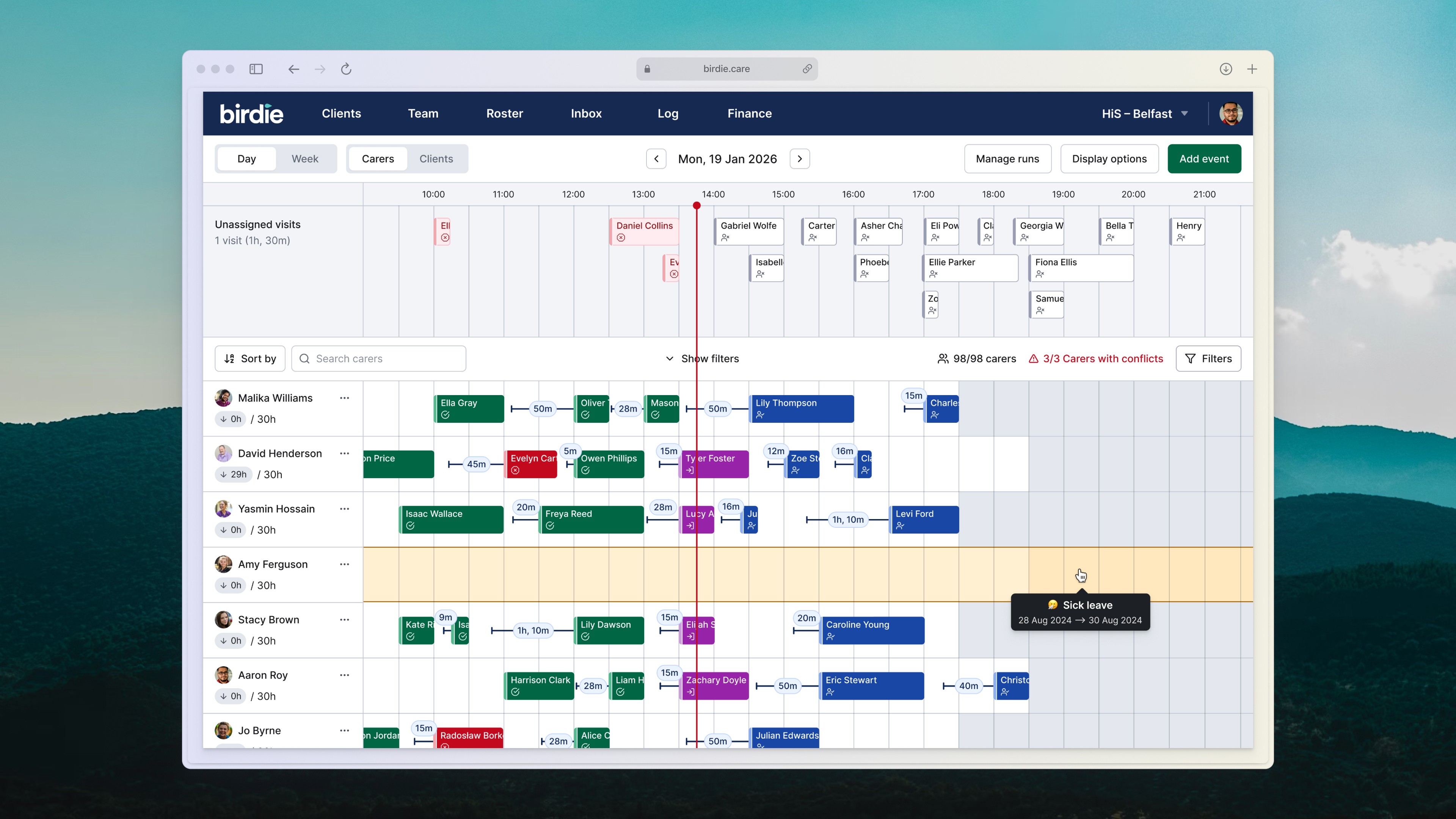
Scheduling new event types
Allowing care coordinators to schedule additional event types, such as training sessions or company meetings, addresses a major source of frustration: previously, coordinators were unable to schedule non-care events, and carers were unable to be paid for attending non-care events without the use of a workaround, such as creating fake care recipients.
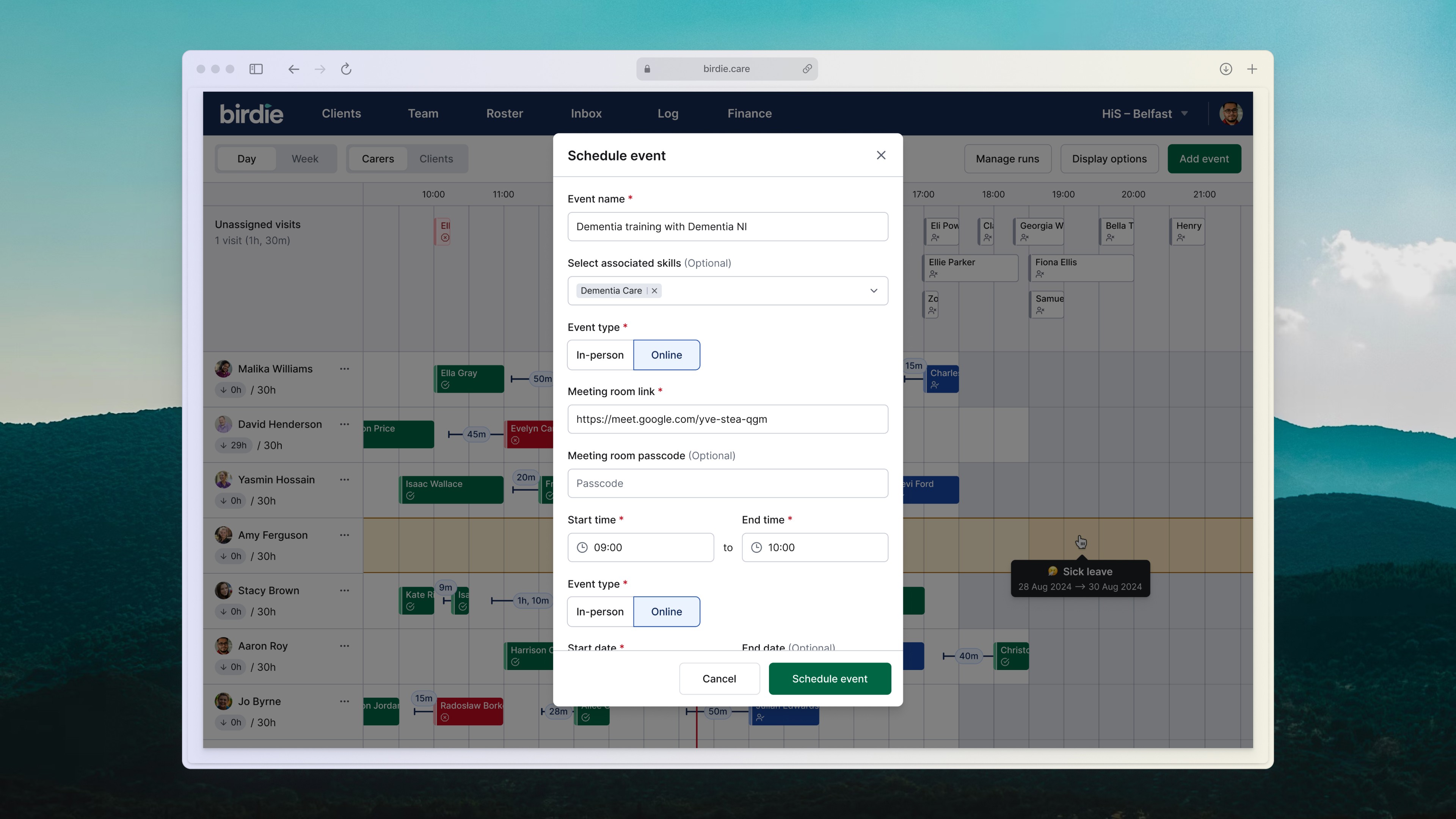
Filters
We’ve introduced a series of advanced filtering options, with many more filters planned for the future. These filters enable care coordinators to quickly and accurately identify the best matches for each visit. For example, ensuring that a carer can drive when supporting clients in rural areas. By incorporating these filters into the roster, we save coordinators time they would otherwise spend reviewing carer and client profiles, and reduce the likelihood of assigning an unsuitable carer.
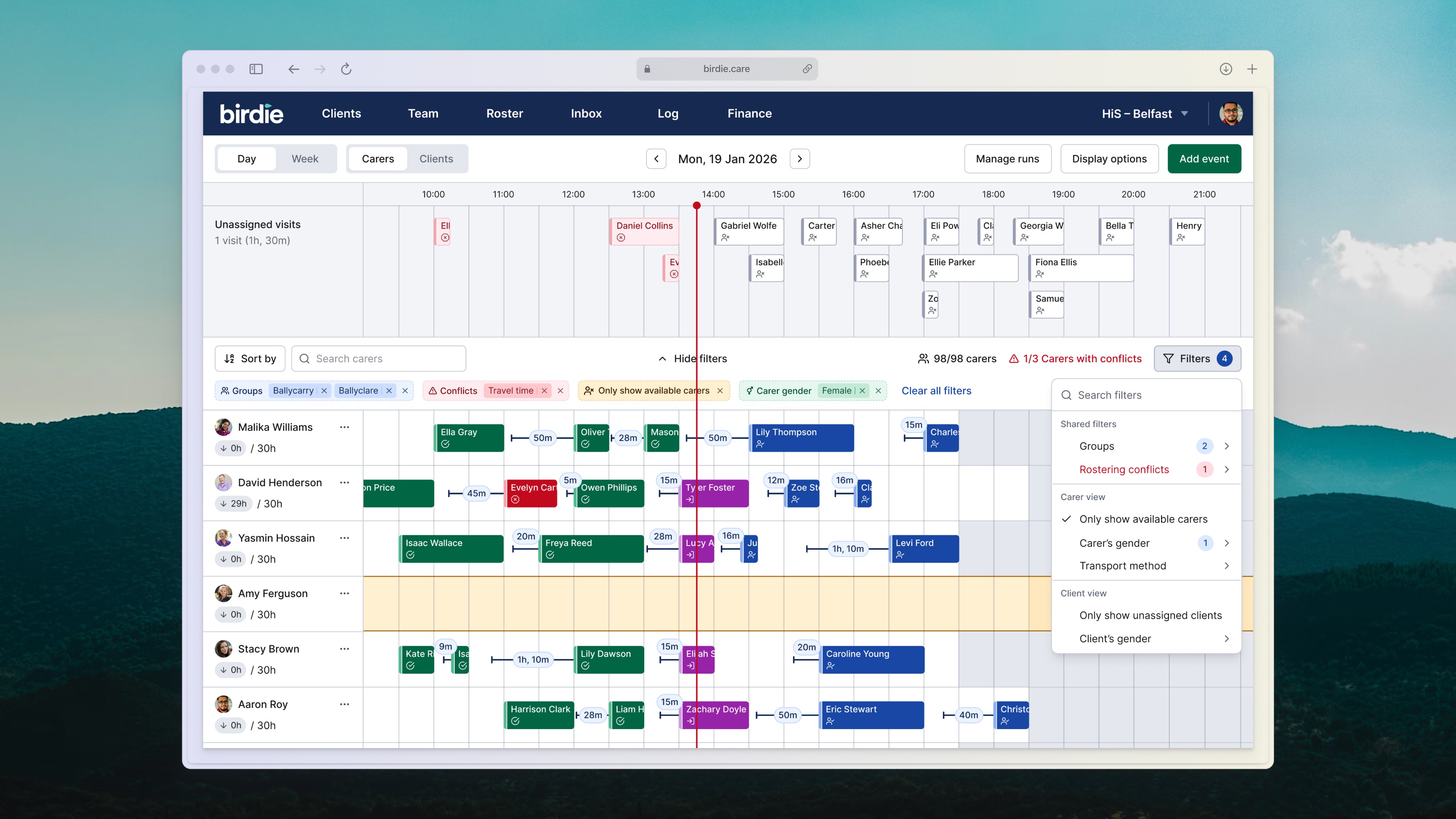
Impact
Birdie’s new rostering system started its closed beta in July 2025, and in the 6 months since its launch, it has helped generate over £900,000 in ARR (Annual Recurring Revenue).
Since launch, our new rostering system has scheduled over 650,000 care visits and delivered more than 750,000 hours of care.
Through auto-applying templates and reducing the average number of manual edits, coordinators can now set up weekly rotas up to 75% faster, boosting daily efficiency.
Adoption of the new rostering product has grown rapidly, with visits scheduled increasing by 143.4% month-on-month and hours of care delivered growing by 120.8% month-on-month.